The Conversation I Avoided for Years
What conflict avoidance really costs. How dodging critical feedback slowly eroded my credibility, trust, and career opportunities—and what finally changed.
The Conversation I Avoided for Years
What conflict avoidance really costs
Like every developer, I had a dream: Architect.
The title that meant you’d made it. The role where you’d finally design systems instead of just building them. Where your technical opinions would carry weight. Where you’d shape the future of products.
I chased that dream for years. I mastered distributed systems. I became the go-to person for debugging complex problems. I shipped features that moved metrics. I read every architecture book, absorbed every pattern.
And it worked. I got the architect role.
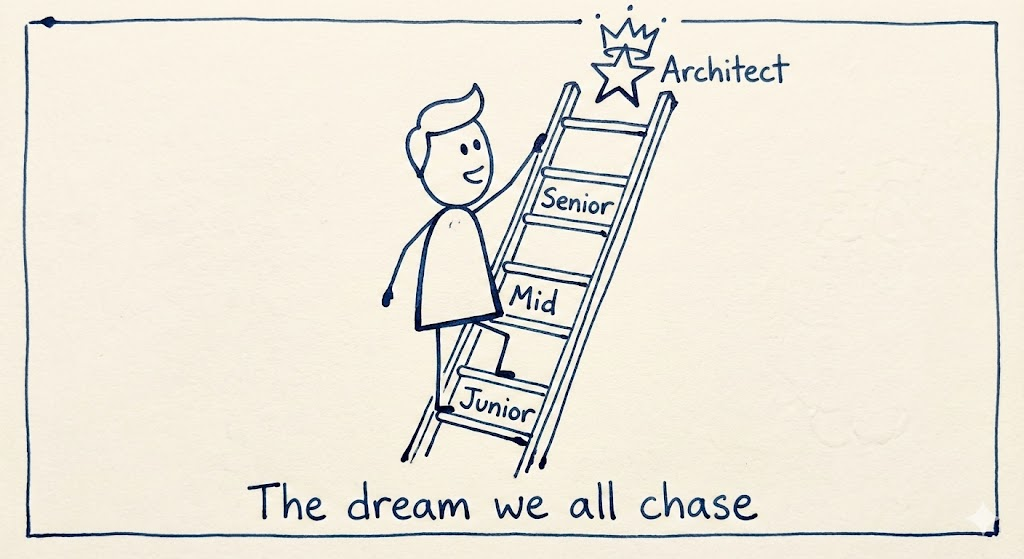
Based purely on technical craft and problem-solving skills, I’d earned my seat at the table.
I walked into my first architecture review meeting expecting to do what I’d always done: present the best technical solution and watch it get approved.
That’s not what happened.
When Technical Excellence Isn’t Enough
The Head of Engineering looked at my architecture proposal for exactly thirty seconds before asking: “Why should we invest six months in this when we could ship something in three?”
I had a good answer. A great answer, actually. The three-month approach would create technical debt that would slow us down for years. I’d done the analysis. I had the data.
But instead of making my case, I felt my throat tighten. The room was watching. The silence stretched.
“I mean… we could probably find a middle ground,” I heard myself say.
That was the moment I discovered the brutal truth about the architect role: the job isn’t about designing systems. It’s about selling systems.
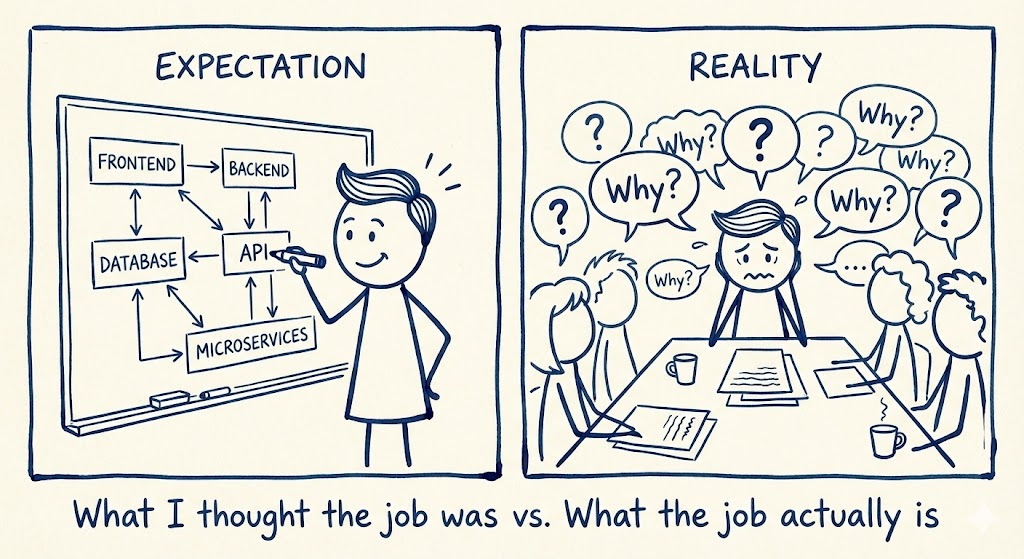
Every architecture decision is a negotiation. You’re not just drawing boxes and arrows—you’re convincing business stakeholders to invest in your vision. You’re persuading product managers that technical debt matters. You’re negotiating timelines with executives who don’t understand why “doing it right” takes longer.
And I was a terrible negotiator.
Not because I lacked ideas. I had plenty. Not because my solutions were wrong. They were often the best option on the table.
But because I couldn’t handle conflict.
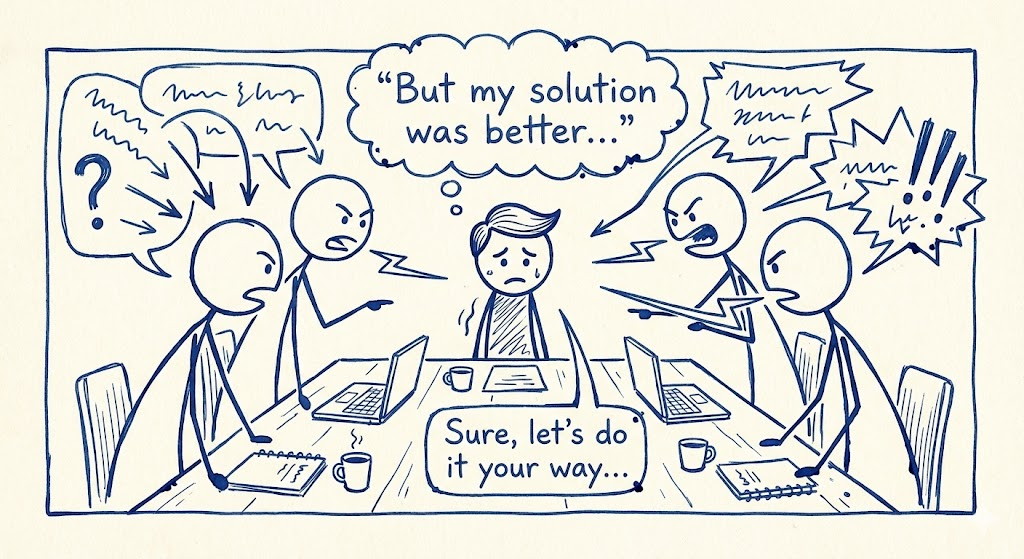
In meetings with business stakeholders, I’d present my architecture. They’d push back—on cost, on timeline, on complexity. And instead of defending my position, instead of engaging with their concerns, I’d fold.
“Yeah, we can probably cut that corner.”
“Sure, that timeline works.”
“I see your point, let’s do it your way.”
I told myself I was being collaborative. Flexible. A team player.
I was actually teaching everyone that my technical opinions could be overruled by whoever pushed hardest.
The Feedback I Refused to Hear
Leadership noticed. They’d mention it in reviews—how I needed to “hold the line” more, how I should “push back when it matters,” how my ideas were good but my conviction was weak.
Sometimes the feedback was brutal. The kind that stings. The kind that could have shaped me the right way if I’d let it.
But I didn’t let it.
I’d deflect. “Yeah, I see what you mean. I’ll think about it.”
Then I’d leave and do absolutely nothing. Because engaging with that feedback—especially the negative, uncomfortable kind—meant having a hard conversation. It meant admitting I might be wrong. It meant conflict.
So I avoided it. Every single time.
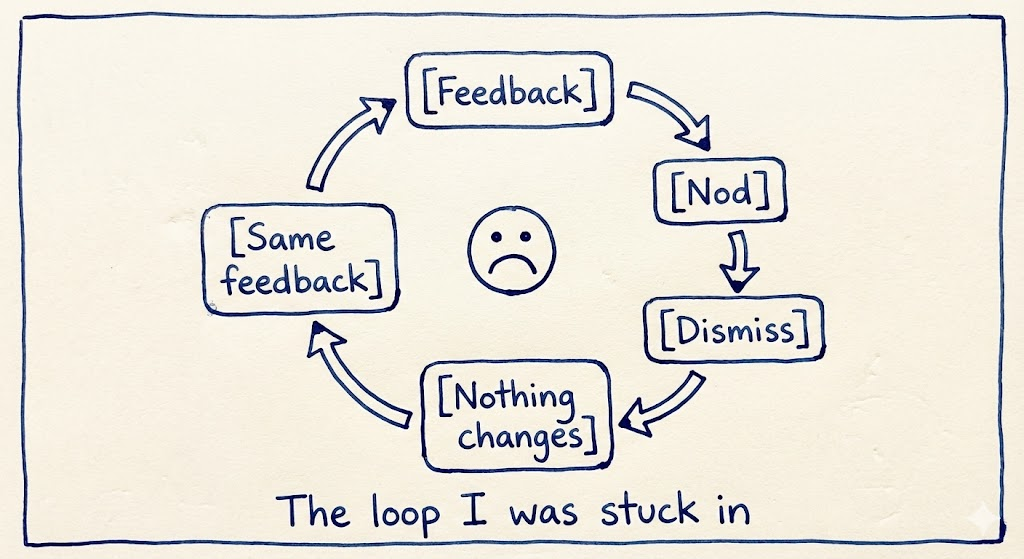
The pattern looked like this:
- Leadership gives feedback → I nod politely
- I internally dismiss it as “not understanding the full picture”
- Nothing changes
- Same feedback resurfaces months later
- I feel frustrated that they “keep bringing this up”
Each small avoidance seemed harmless. But small avoidances compound. What felt like dodging one uncomfortable conversation became a pattern. And patterns become identity.
I was the architect who couldn’t sell his own ideas. The technical leader who crumbled under pressure. The expert whose expertise didn’t matter because he couldn’t defend it.
Every performance review had the same undertone: “Technically strong, but…”
That “but” was a wall I couldn’t see myself building, brick by brick.
What I Was Actually Losing
Here’s what conflict avoidance really cost me:
Credibility Erosion
Every time I nodded along and then did nothing, leadership noticed. Not consciously, maybe. But trust is built in small moments, and I was failing those moments repeatedly.
When I said “I’ll work on that,” and didn’t, I was teaching the organization that my words meant nothing. That I couldn’t be counted on to grow. That I was defensive, even if I never raised my voice.
Small avoidances. Compound damage.
The brutal truth: People stopped giving me feedback at all. Not because I’d improved—because they’d given up on me.
Stuck in the Same Role
I made it to architect. And then I stayed there. For years.
The leadership position was created. My name never came up. I wasn’t even in the conversation.
I had built my ceiling at architect level and couldn’t figure out why I wasn’t moving to the next stage.
The Ceiling I Built
I had constructed an invisible ceiling above my own head. Every avoided conversation was another layer of glass. I could see the opportunities above me. I just couldn’t reach them.
And the worst part? I was good at my craft. Really good. But being good at building systems doesn’t matter if people don’t trust you to navigate complexity with humans.
Technical skills got me in the room. Avoiding conflict kept me from ever leading it.
The Isolation
I started feeling like an outsider in my own team. Decisions were made without my input—not maliciously, but because people had learned I wouldn’t push back anyway. Why include someone who just agrees with everything?
I’d become furniture. Reliable, present, and completely ignorable.
The Conversation That Changed Everything
The turning point didn’t come from a performance review or a leadership confrontation. It came from a mentor.
I’d been venting to him about feeling stuck—how I kept getting the same feedback, how leadership didn’t understand my contributions, how the system was unfair.
He listened. Then he said something that rewired my brain:
“You’re not avoiding conflict. You’re avoiding growth. Every piece of feedback you deflect is a lesson you refuse to learn. And the organization isn’t punishing you—they’re just responding to the version of you that you keep showing them.”
I wanted to argue. But he wasn’t done.
“Feedback isn’t an attack. It’s a mirror. You can disagree with what you see, but you can’t pretend the mirror is lying. The people giving you brutal feedback? They’re the ones who still care enough to try. The ones who’ve given up on you—they’ve stopped saying anything at all.”
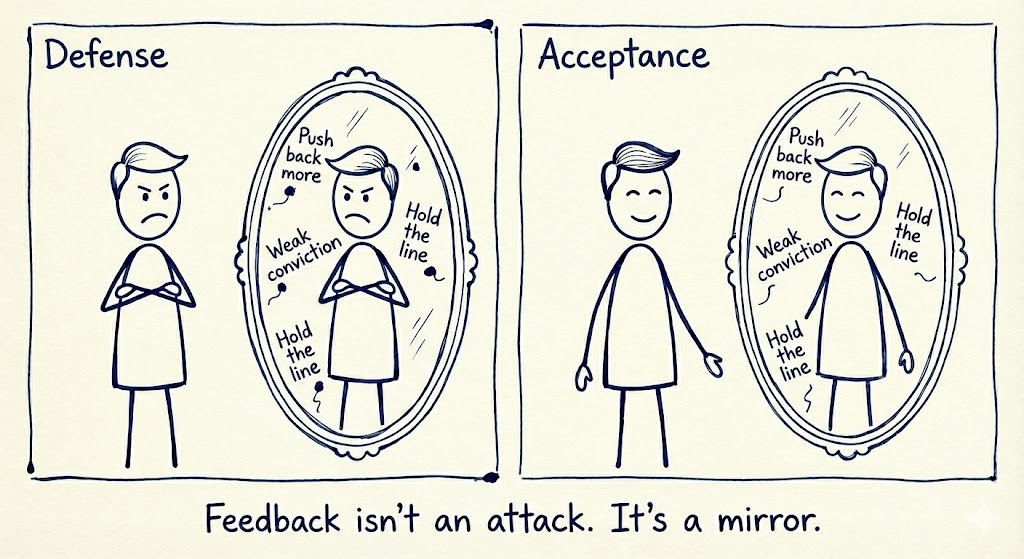
That hit different.
He continued: “Difficult conversations aren’t obstacles to your career. They ARE your career at this level. Technical skills got you to architect. But the ability to have hard conversations, to receive feedback without crumbling, to engage instead of deflect—that’s what gets you to the next stage.”
What My Mentor Taught Me
1. Feedback is a mirror, not a weapon
The feedback wasn’t about my worth as a person. It was information about how I was being perceived. My mentor said: “You can disagree with feedback, but you have to engage with it first. Dismissing it without examination is just fear wearing a logical mask.”
I started asking: “Can you give me a specific example?” Not defensively—genuinely. Because specifics are actionable. Vague feedback is just noise.
2. Practice disagreement in low-stakes moments
My mentor’s advice: “You’re treating conflict like a final exam. Start treating it like practice. Disagree about small things. Build the muscle.”
I started small. Disagreeing about lunch choices. Pushing back on meeting times. Tiny moments where the stakes were zero but the muscle was the same.
It felt ridiculous. But it worked. Conflict became less terrifying when I’d done it a hundred times over sandwiches.
3. Separate the conversation from the relationship
My biggest fear was that disagreement would damage relationships. My mentor laughed: “Your constant agreement is what’s damaging them. People don’t trust someone who never pushes back. They wonder what you’re hiding.”
Real relationships can handle disagreement. What they can’t handle is dishonesty disguised as politeness.
4. Name the discomfort
“When you feel defensive, say it out loud,” my mentor advised. “‘This is hard to hear, but I want to understand.’ That one sentence changes everything. It shows you’re engaged, not defeated.”
When I felt myself wanting to deflect, I started saying it out loud: “This is uncomfortable for me to hear, but I want to understand it better.”
That simple acknowledgment changed everything. It signaled that I was engaged, even when I was struggling.
5. Follow up relentlessly
“The follow-up is where trust is rebuilt,” he told me. “Anyone can nod in a meeting. Coming back with what you tried—even if you failed—that’s what separates people who grow from people who stagnate.”
After receiving feedback, I’d come back in the next conversation with what I’d tried. Even if it was small. Even if I’d failed. The follow-up proved I was taking it seriously.
This single habit rebuilt more trust than anything else.
The Transformation
It didn’t happen overnight. For months, I felt like I was faking it—forcing myself into conversations that made my palms sweat.
But slowly, things shifted.
Leadership started sharing more context with me. I was included in discussions I’d been excluded from before.
What I Understand Now
Conflict avoidance isn’t kindness. It’s cowardice wearing a polite mask.
Every time I avoided a hard conversation, I was choosing my own comfort over:
- The relationship’s health
- My own growth
- The team’s ability to function honestly
I thought I was keeping the peace. I was actually just delaying the inevitable while paying compound interest on unresolved tension.
The Conversation You’re Avoiding
If you’re reading this and recognizing yourself, here’s what I want you to know:
You’re not bad at conflict. You’re unpracticed.
The discomfort you feel isn’t a sign that you shouldn’t have the conversation. It’s a sign that you need to.
That feedback you’ve been deflecting? It’s probably right. Not entirely, maybe. But there’s truth in it. And engaging with that truth—really engaging, not just nodding—is the only way through.
The career ceiling you’re hitting isn’t about your technical skills. It’s about this. It’s always about this.
Start small. Start today. Start with the next conversation you want to avoid.
Because the cost of avoidance isn’t paid upfront. It’s paid slowly, invisibly, in opportunities that never come and trust that quietly erodes.
And by the time you notice, you’ve built a wall you can’t see around a career that could have been so much more.
Key Takeaways
If you take nothing else from this story, remember these:
-
Conflict handling isn’t just for architects—it’s a must-have skill for every role. Whether you’re a junior developer, senior engineer, or tech lead, the ability to navigate difficult conversations determines how far you go. I learned this lesson as an architect, but I wish I’d learned it as a junior. Start building this muscle early.
-
Technical skills get you the role. Communication skills let you succeed in it. Every level requires more than technical excellence—it demands negotiation, persuasion, and the ability to defend your ideas under pressure.
-
Conflict avoidance is compound interest working against you. Every small deflection feels harmless. But they accumulate into a pattern that defines how people see you—at every level of your career.
-
Feedback is a mirror, not an attack. The people giving you brutal feedback are the ones who still care. The ones who’ve given up have stopped saying anything at all.
-
You’re not bad at conflict—you’re unpracticed. Start small. Disagree about low-stakes things. Build the muscle before you need it. This applies whether you’re in your first year or your tenth.
-
The follow-up is where trust is rebuilt. Anyone can nod in a meeting. Coming back with what you tried—even if you failed—separates growth from stagnation.
-
The ceiling you’re hitting isn’t technical. If you’re stuck at the same level despite strong skills, look at the conversations you’re avoiding. That’s where the answer is—for juniors stuck at senior, seniors stuck at staff, architects stuck at director/head of engineering/cto.
Thank You
Thank you for reading this far.
Writing this wasn’t easy—it meant revisiting years of mistakes I’d rather forget. But if my story helps even one person recognize the pattern earlier than I did, it was worth sharing.
If this resonated with you, I’d love to hear your story. What conversation have you been avoiding? What feedback have you been deflecting?
Sometimes just naming it is the first step toward changing it.
The conversation you’re avoiding is the conversation you most need to have.
So let me ask you this: What’s the one conversation you’ve been putting off—the one that makes your stomach tighten just thinking about it? And what would change if you finally had it?
Related Posts
What I Wish I Knew When I Was 10 Years in Tech
Two decades of lessons. Five problems nobody warned me about. The invisible struggles most developer faces—and how to navigate them.
Cloud Migration as a Socio-Technical Problem (Not Technical)
Why cloud migrations fail through ownership gaps, incentive misalignment and skills shortages, and how to make the operating model part of the migration.
DevOps Without Culture: The Silent Failure
Why DevOps tooling without shared ownership, blameless response and short feedback loops automates a broken process.